

Thermostats

Your thermostat is the control center of your heating and cooling system. It decides when the system runs, for how long and, on newer equipment, how hard. A good match keeps your home comfortable without wasting energy, while a poor one can leave rooms uneven or keep your system from using features you paid for.
Choosing a thermostat starts with your equipment, then the way your household lives. Before they upgrade, most Charlotte homeowners want to know which type fits, what a smart thermostat really saves and whether it will work with the system they already have.
Which Type of Thermostat Is Right for You?
There are four main types. Which one fits depends on your system and how much you want the thermostat to do on its own:
| Feature | Non-Programmable | Programmable | Smart | Communicating Control |
|---|---|---|---|---|
| How it works | You change the temperature by hand | Follows a weekly schedule you enter | Adjusts on its own based on your schedule, room sensors and whether anyone is home | Shares information with your indoor and outdoor units to fine-tune how they run |
| Phone app and alerts | No | Only on some Wi-Fi models | Yes | Yes, on most current models |
| Energy savings | Only when you remember to adjust it | Only if the schedule is set and kept | ENERGY STAR certified models save about 8% on heating and cooling bills on average | Lets variable-speed equipment deliver the efficiency it was built for |
| Works with | Most standard systems | Most standard systems | Most forced-air systems, some with an adapter or an added wire | The matching communicating equipment from the same manufacturer |
| Best for | Simple needs and rarely used spaces | Households with a steady routine | Busy households that want savings without programming | Homes with a communicating variable-speed system |
A programmable thermostat saves energy only if someone sets the schedule and sticks to it, and many never do. ENERGY STAR stopped certifying programmable models in 2009 over questions about their real-world savings. It now certifies smart thermostats instead, based on a year of data from real homes.
How Much Can a Smart Thermostat Save?
According to ENERGY STAR, a certified smart thermostat saves about 8% of heating and cooling bills on average. Some homes save more, depending on climate, comfort preferences, how often the house sits empty and the equipment it controls. You may see bigger numbers in advertising, but the ENERGY STAR figure comes from independent field data. The savings come from features that trim runtime without you having to think about it:
- Schedules and away settings. The thermostat eases off while you sleep or are out, then brings the house back to temperature before you need it.
- Home and away detection. Many models use your phone's location or a motion sensor to tell when no one is home.
- Room sensors. Remote sensors let the thermostat respond to the rooms you're using, not just the hallway where it hangs.
- Humidity control. Some models can run a whole-home humidifier or dehumidifier, so you stay comfortable at a more efficient setting.
- Reports and reminders. Energy reports show how your system runs, and alerts tell you when it's time to change the filter or schedule maintenance.
Should You Turn the Heat Down at Night?
With a furnace, yes. Setting the temperature back while you sleep or are away saves energy, because a cooler house loses heat more slowly. A heat pump is different. When it has to warm the house back up several degrees on a cold morning, it can call on its backup electric heat, which costs several times as much to run as the heat pump itself. With a heat pump, keep setbacks small and use a thermostat set up to recover gradually and limit backup heat.
Will a Smart Thermostat Work With Your System?
ENERGY STAR notes that smart thermostats work with most forced-air systems installed after 1975. Whether a particular model fits comes down to your equipment and the wiring behind your current thermostat:
- The C-wire. Most smart thermostats need a common wire, or C-wire, for steady power to run the screen and Wi-Fi. No C-wire doesn't rule one out, because an adapter or a new wire can often solve it.
- Heat pumps and dual-fuel systems. The thermostat has to be set up for the heat pump's heating and cooling modes and its backup heat. A dual-fuel system also needs one that can switch between the heat pump and the furnace.
- Multi-stage, variable-speed and zoned systems. These usually need professional setup so every stage, speed and zone is controlled correctly.
- Boilers. Many heating-only systems, including most boilers, have just two thermostat wires and no C-wire, so they often need a power adapter or a model made for them.
- Electric baseboard heat. Baseboard heaters run on 120 or 240 volts and need a line-voltage thermostat. A standard smart thermostat can't control them, and line-voltage wiring should be left to a professional.
- Gas wall and floor heaters. Many use millivolt controls that can't supply enough power for a smart thermostat.
Communicating Systems Work Best With Their Own Control
Many variable-speed systems are communicating systems: the thermostat, the indoor unit and the outdoor unit share information to adjust speed, airflow and humidity. They are designed around their matching control, and ENERGY STAR advises using the thermostat the equipment manufacturer recommends for variable-speed equipment. A generic smart thermostat may run the system in a simpler mode that gives up the variable-speed efficiency and humidity control it was built for.
A quick clue: if the wires behind your thermostat connect to terminals marked with numbers or letters like A, B and C instead of the usual R, W, Y and G, your system is likely communicating or proprietary. We can tell you exactly what it needs.
Thermostat Repair or Replacement?
When your heating or cooling stops responding, the thermostat is often the first suspect, but the cause can just as easily be the wiring or the equipment itself. A few quick checks can tell you whether you need a service call:
- Batteries. A blank or dim screen often means the batteries are low. Many thermostats use them, including some that are also wired to the system, so try fresh ones first.
- Settings. Make sure the thermostat is set to Heat or Cool, the fan is on Auto, and a schedule or temporary hold isn't overriding the temperature you chose.
- Location. Direct sunlight, a nearby supply vent or an appliance that gives off heat can make a thermostat read the wrong temperature and run your system at the wrong times.
- The breaker. A wired thermostat shares a breaker with your heating and cooling system. If that breaker has tripped, leave it off and call us. The trip points to a problem in the equipment, and switching it back on can cause more damage.
When a Repair Makes Sense, and When to Replace
If the quick checks don't solve it, a technician can test the thermostat, its wiring and the system to find the real cause. Loose, corroded or damaged wiring, a thermostat in the wrong spot, or settings that don't match your equipment can usually be fixed without a new thermostat. Replacement is the better choice when the thermostat itself has failed, when it's an older dial or lever model, or when it can't run your current system the way it should. It's also a chance to move up to a smart thermostat if you want scheduling, phone control and room sensors.
The Tidwell and Sons HVAC team diagnoses thermostat problems and recommends a repair or a replacement based on what we find.
What Professional Thermostat Installation Includes
Some thermostat swaps are simple. Others involve a heat pump, extra stages, a missing C-wire or line-voltage wiring, where one wrong connection can blow a fuse on your system's control board or leave it running poorly. Here's how a professional installation goes:
System and Wiring Check
We identify your equipment, its stages and its wiring, and confirm the thermostat you choose is fully compatible.
The Right Location
We make sure the thermostat sits where it reads your home accurately, away from sunlight, drafts and supply vents.
Wiring and Setup
We add a C-wire or adapter if needed, then set up stages, heat pump and backup heat settings, and any humidity accessories.
Testing and Walkthrough
We test heating, cooling and the fan, connect the app, set your schedule and show you how everything works.
Frequently Asked Questions About Thermostats
Most smart thermostats need one. The C-wire, or common wire, gives the thermostat steady power for its screen and Wi-Fi. Some models can run without it, but on some systems that leads to problems such as the thermostat dropping its Wi-Fi connection or the system turning on and off unexpectedly. If your system has no C-wire, an adapter or a new wire can often solve it.
On a simple heating and cooling system, many homeowners can. Heat pumps, dual-fuel, multi-stage, variable-speed and zoned systems are harder to set up correctly, and a line-voltage thermostat for baseboard heat should only be installed by a professional. A professional installation also confirms the thermostat is compatible and set up to run your system the way it should.
Yes. It keeps heating and cooling your home and runs its current schedule. What stops until the connection comes back is control from your phone and features that rely on the internet, such as home and away detection and software updates. App support for older models can also end over time, but the thermostat itself typically keeps running its schedule.
On an interior wall, roughly 4 to 5 feet off the floor, in a central part of the home. Keep it away from windows, direct sunlight, doorways, supply vents and appliances that give off heat, all of which can make it read the wrong temperature. A smart thermostat also works best within good range of your Wi-Fi router.
It might. Thermostats that use a dial or lever, especially in homes built before 2002, often contain a small sealed vial of mercury. It's safe while the vial stays intact, but an old mercury thermostat shouldn't go in the trash. Take it to a household hazardous waste collection site or a thermostat recycling drop-off location.
Common signs include a blank or flickering screen when it has power, a reading that doesn't match the actual temperature, a system that doesn't respond when you change the setting, and heating or cooling that turns on and off too often. Those can have other causes, so a technician can confirm whether the thermostat is the problem. Replacing your heating or cooling system is also a good time to replace the thermostat, so the control matches what the new equipment can do.
Honeywell Programmable Thermostats

WIFI 9000 COLOR TOUCHSCREEN THERMOSTATView Brochure |
|---|
| Model Family: TH9320WF5003/U |
| Programmable: 7-Day Programmable, Manual / Not Programmed |
| Communicating Capability with HVAC Components: Yes |
| Remote Access: Yes |
| Screen: Touch Screen |
| Warranty: 5 year warranty |
Manufacturer's Stated Benefits:
|

PRO 2000 HORIZONTAL PROGRAMMABLE THERMOSTATView Brochure |
|---|
| Model Family: TH2110DH1002/U |
| Programmable: heating and cooling schedules for the weekdays and weekends, |
| Communicating Capability with HVAC Components: Yes |
| Remote Access: No |
| Screen: LCD screen |
| Warranty: 2 Year Warranty |
Manufacturer's Stated Benefits:
|

T6 Pro Programmable ThermostatView Brochure |
|---|
| Model Family: TH6210U2001 |
| Programmable: 2 Heat/1 Cool |
| Communicating Capability with HVAC Components: Yes |
| Remote Access: N/A |
| Screen: LCD screen |
| Warranty: 5 year warranty |
Manufacturer's Stated Benefits:
|
Ecobee Smart Thermostats

Smart Thermostat PremiumView Brochure |
|---|
| Model Family: Smart Thermostat Premium |
| Programmable: As Smart Thermostat gets to know your home’s heating and cooling patterns, it learns how long it takes to reach your desired temperature. |
| Communicating Capability with HVAC Components: Works with most HVAC Equipment |
| Remote Access: Dual-band Wi-Fi: 802.11 b/g/n @ 2.4GHz, 802.11 a/n/ac @ 5GHz |
| Screen: 4 in. full-color LCD touchscreen |
| Warranty: 3-year limited warranty |
Manufacturer's Stated Benefits:
|
ecobee Smart Thermostat EnhancedView Brochure |
|---|
| Model Family: Smart Thermostat Enhanced |
| Programmable: ecobee Smart Thermostat Enhanced learns your temperature preferences and your schedule, so your home is just the way you like it. |
| Communicating Capability with HVAC Components: Yes |
| Remote Access: Control from anywhere with your iOS or Android device |
| Screen: Crystal clear touchscreen with a 50% larger display and smooth waterfall edges. |
| Warranty: Backed by an industry-leading 3-year warranty |
Manufacturer's Stated Benefits:
|

ecobee3 liteView Brochure |
|---|
| Model Family: ecobee3 lite |
| Programmable: Yes |
| Communicating Capability with HVAC Components: Yes |
| Remote Access: Yes |
| Screen: 3.5 |
| Warranty: 3 Year Warranty; 5 year warranty with contractor installation |
Manufacturer's Stated Benefits:
|
Lennox Thermostat Product Offering

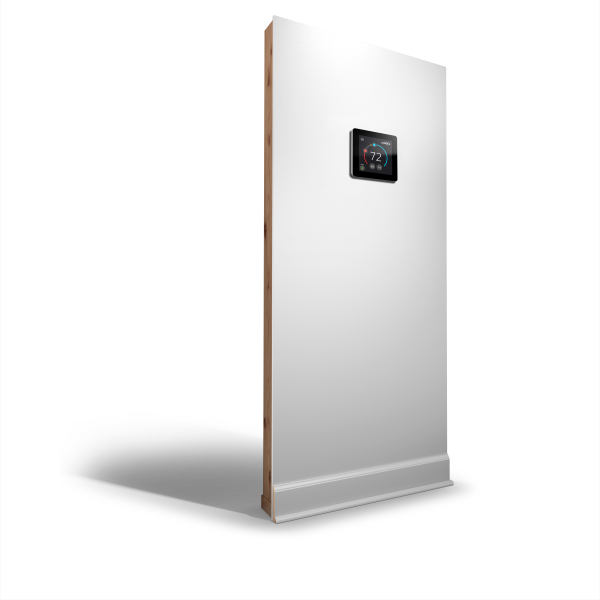
Lennox S40 Smart ThermostatView Brochure |
|---|
| Model Family: S40 |
| Programmable: Versatile programming options offer custom comfort and energy savings |
| Communicating Capability with HVAC Components: Yes |
| Remote Access: Monitor and adjust temperatures and schedules from anywhere in the world using the iComfort App and your smartphone, tablet or other web-enabled device |
| Screen: Features a large, easy-to-use display with adjustable brightness |
| Warranty: 10-Year Limited Warranty |
Manufacturer's Stated Benefits:
|
Lennox E40 Smart ThermostatView Brochure |
|---|
| Model Family: E40 |
| Programmable: Yes |
| Communicating Capability with HVAC Components: Yes |
| Remote Access: Yes |
| Screen: Four-color, touchscreen display |
| Warranty: 5-Year Limited Warranty |
Manufacturer's Stated Benefits:
|
Lennox M40 Smart ThermostatView Brochure |
|---|
| Model Family: M40 |
| Programmable: Yes |
| Communicating Capability with HVAC Components: Yes |
| Remote Access: Smart Home Integration |
| Screen: Touchscreen |
| Warranty: 5-Year Limited Warranty |
Manufacturer's Stated Benefits:
|
Lennox L40 Smart ThermostatView Brochure |
|---|
| Model Family: L40 |
| Programmable: Yes |
| Communicating Capability with HVAC Components: Yes |
| Remote Access: Smart Home Integration |
| Screen: Four-color, touchscreen display |
| Warranty: 5-Year Limited Warranty |
Manufacturer's Stated Benefits:
|